
Agri Tourism
Farming Life at the Top of Mannavanur
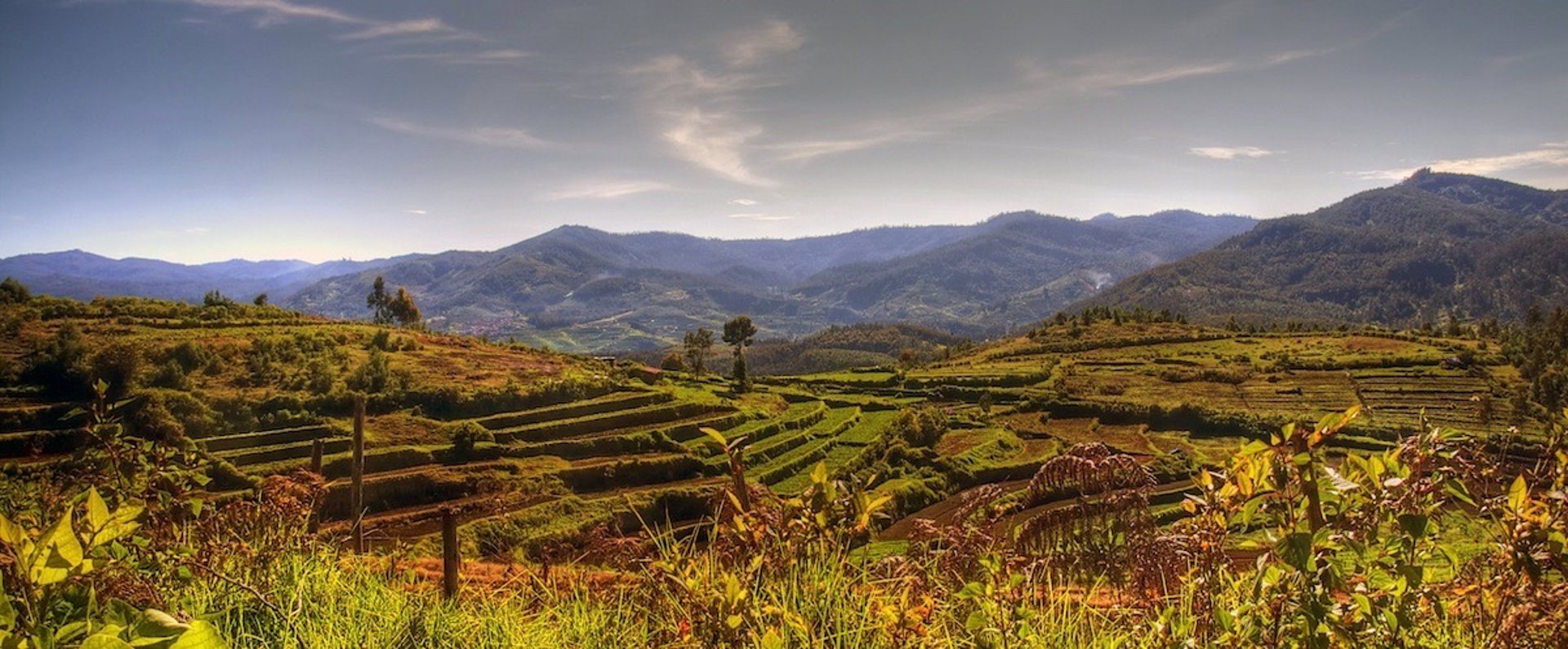
High in the Palani Hills, where the air is cool, the mist rolls in before breakfast and the earth is deep red with laterite, the villages around Mannavanur have been growing food for as long as anyone can remember. At nearly 1,900 metres above sea level, this is a farming world unlike anything in the Tamil Nadu plains and visiting it changes how you think about where food comes from.
Why These Hills Feed So Well
We're For generations, the families of Mannavanur and the surrounding hamlets have earned their living from the land. What makes this possible at such elevation is a rare combination of geography and climate: the Palani Hills sit at the junction of two monsoon systems, receiving rainfall from both the southwest and northeast seasons. That double dose of rain, combined with cool temperatures that rarely climb above 22°C even in the hottest months, creates growing conditions that are quite impossible to replicate in the scorching Tamil Nadu lowlands.
The soils here are mineral-rich laterite, formed from the weathering of ancient rock over millions of years. Centuries of composting, crop rotation and traditional land management have built up a topsoil layer that holds moisture well and releases nutrients steadily, a natural advantage that flatland farmers pay dearly to replicate with chemical inputs.
Most residents of Mannavanur and the nearby villages of Poondi, Polur, Kilavarai, Poombarai and Kukkal depend directly on farming for their income and food. The agricultural calendar shapes daily life here, when to sow, when to weed, when to harvest, when to let a field rest. It is not just an occupation. It is the rhythm of the whole community.
Regional Quick Facts:
• Elevation: 1,880 m above sea level • Temperature: 12°C to 22°C year round • District: Dindigul, Tamil Nadu • Hill range: Palani Hills (part of the Western Ghats) • Population: Approx. 5,900 residents • Recognition: ICAR-designated Agri Eco-Tourism site
How Terrace Farming Works
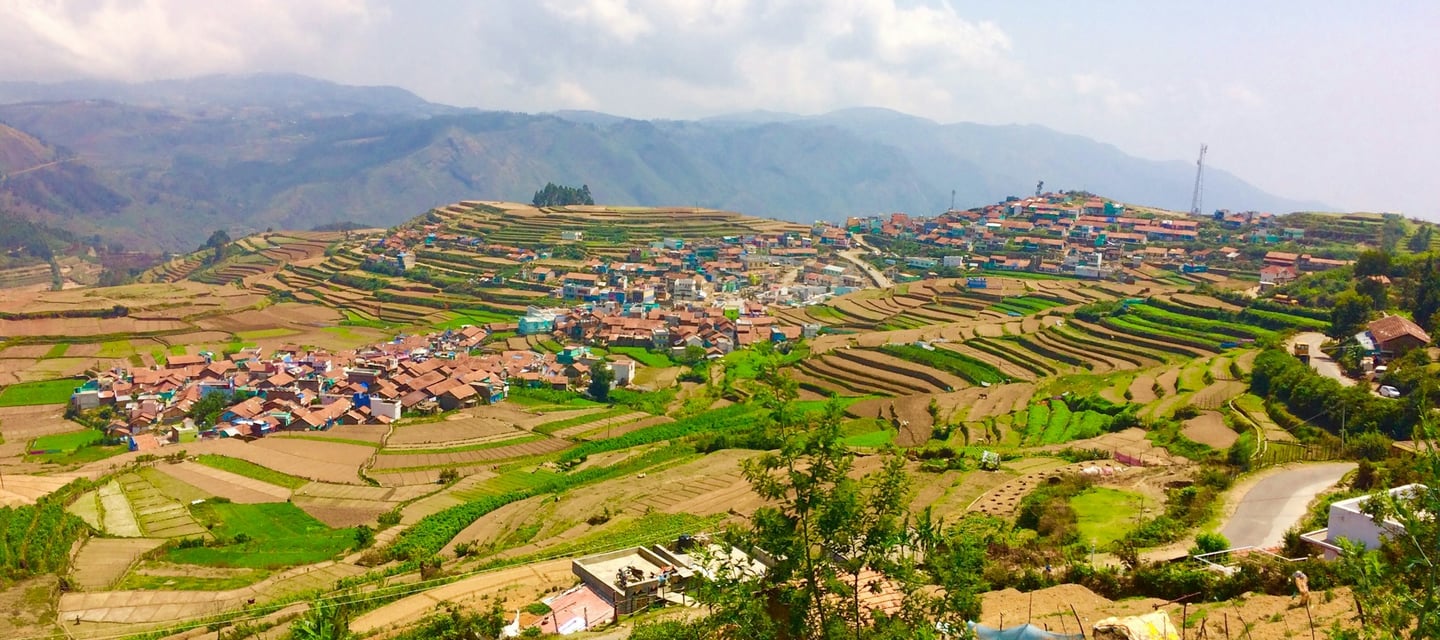
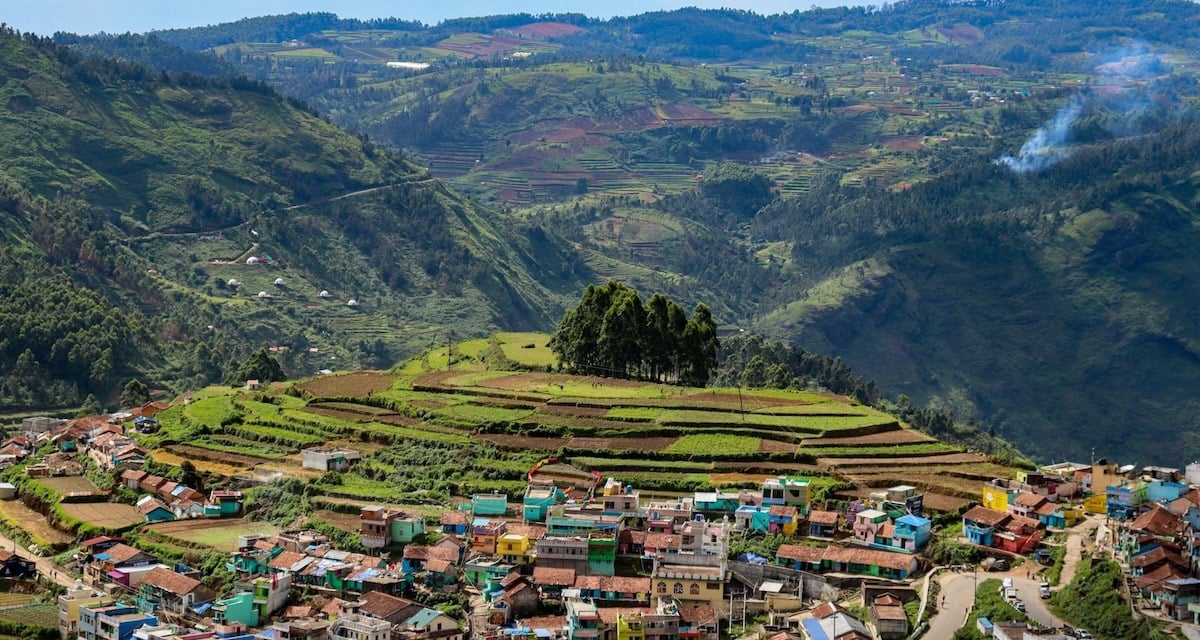
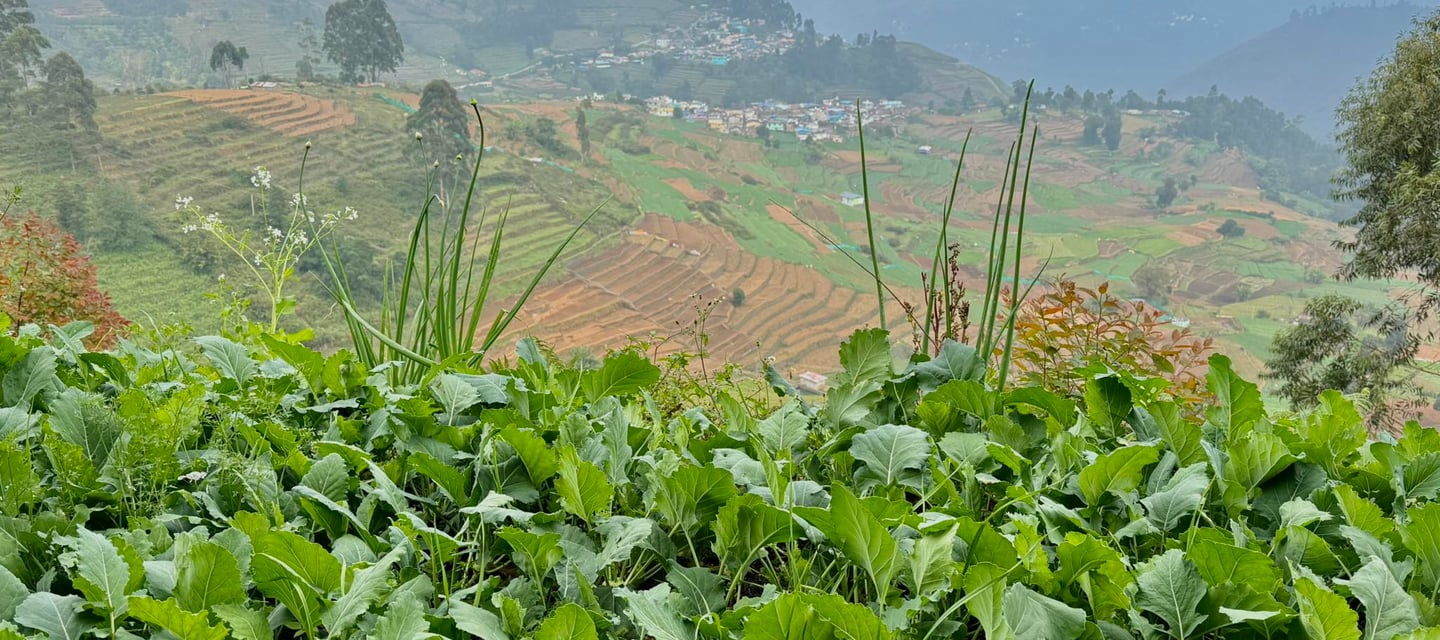
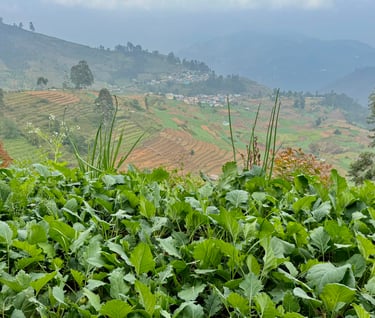
When you first see the hillsides around Mannavanur and Poombarai, the sight is genuinely arresting — broad, flat shelves of cultivated land stepping down the slope like a staircase built for giants. This is terrace farming, and in these hills it has been practised for centuries.
Step 1 — Shaping the Hill
Building a terrace begins with reading the land. Farmers identify the natural contour lines of the slope and cut horizontally into the hillside at regular intervals, using the excavated soil to build up a raised rim on the outeredge. The result is a series of level platforms, each one wide enough to plough, plant and move through with basic equipment. In Poombarai, these descending platforms cover the hillsides so completely that the village itself looks as though it is sitting on a green wedding cake.
Step 2 — Managing Water
A terrace farm is, at its heart, a water management system. Rain that falls on the uppermost terrace is absorbed by the soil; what overflows trickles gently to the next level down rather than racing destructively down the bare hillside. Each platform essentially slows and redistributes rainfall across the entire slope. Side channels and small stone diversions direct surplus water along the contours. Springs and hill streams provide supplemental irrigation through drier spells. Erosion, which would strip an unmanaged hillside bare within a decade, is almost entirely prevented.
Step 3 — Working with the Seasons
The farming calendar in Mannavanur follows two main growing seasons. The Kharif season (June to September) coincides with the monsoon, when the terraces are freshly fed with rainwater and fast-growing green crops, beans and leafy vegetables are planted. The Rabi season (October to February) is the cooler, drier period when the best temperate vegetables, potatoes, cauliflower, broccoli and carrots, reach their full flavour and are harvested for sale. Between seasons, some terraces are left fallow or planted with nitrogen-fixing cover crops to restore soil health. Very little ground is wasted.
What Grows on the Palani Hills
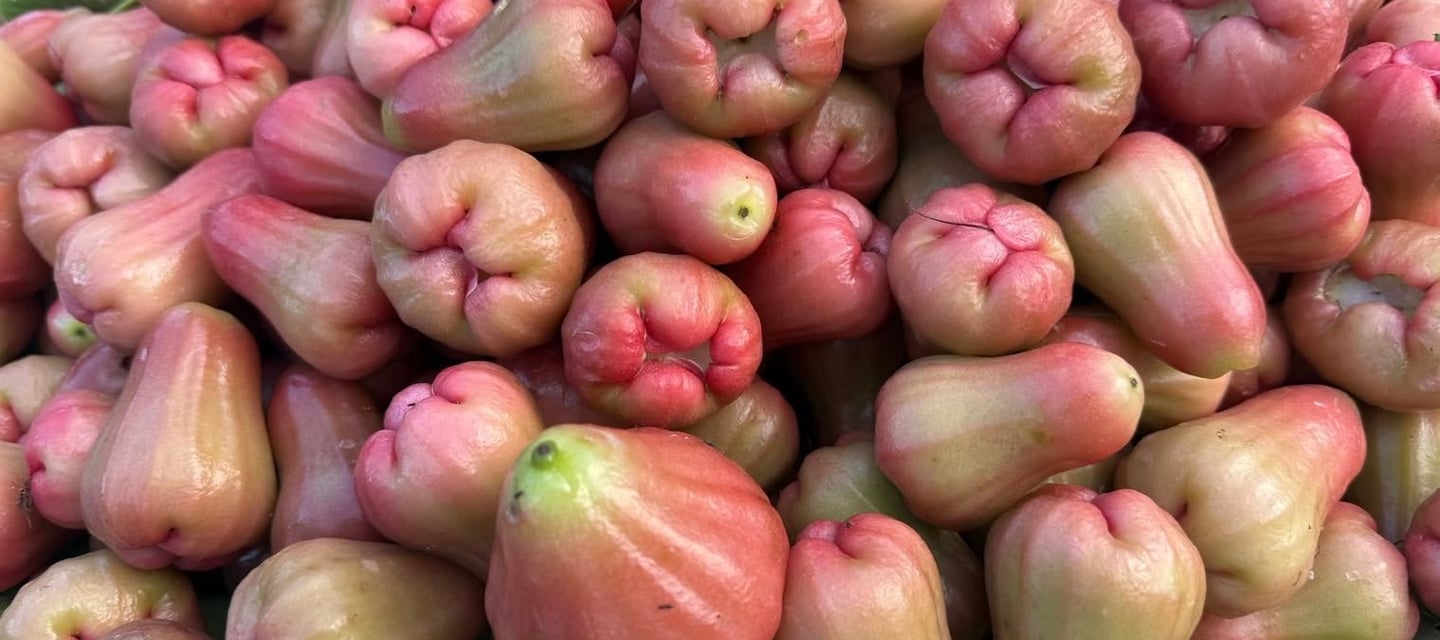
The cool, well-watered environment of the Mannavanur highlands makes it possible to cultivate a range of vegetables that simply cannot survive the heat of the Tamil Nadu plains. The farms here supply produce to Kodaikanal, Dindigul, Madurai and beyond — and visiting tourists are often surprised to find high- quality vegetables growing at roadside stalls for a fraction of city prices.
Potato
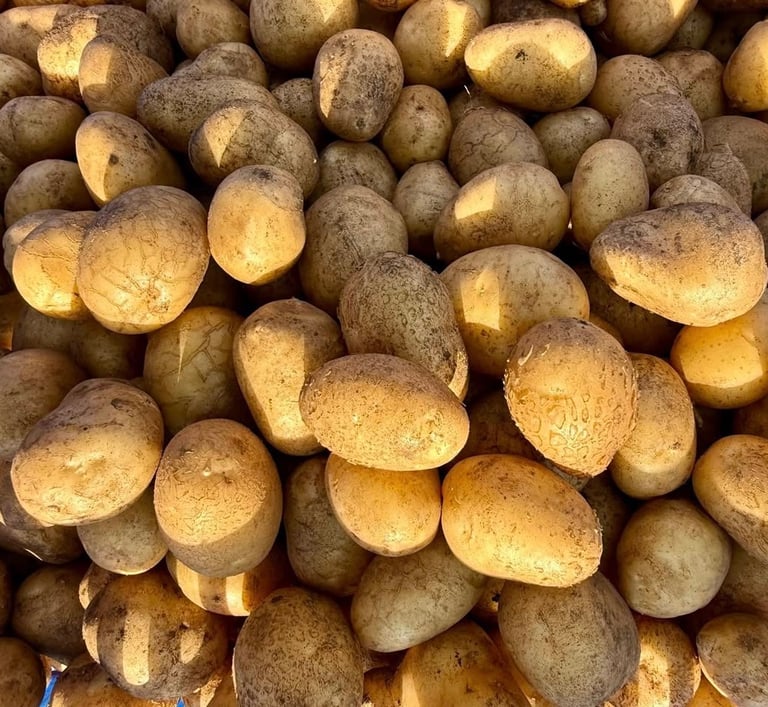
The most important cash crop in the region. Highland potatoes grown in laterite soil develop a firmer texture and earthier flavour than their plains-grown equivalents. Harvest peaks between October and January.
Broccoli
One of the vegetables most closely associated with Mannavanur's cool altitude. Broccoli demands temperatures below 18°C to form good heads, and the Palani Hills provide exactly that for much of the year. It is grown widely across Mannavanur and Poombarai.
Carrot
The sweet, crunchy carrots from these farms are a popular buy for visitors. Highland-grown carrots tend to be thinner and more intensely flavoured than commercially grown varieties. They are sold fresh at roadside stalls throughout the season.
Cabbage
Large, tightly packed heads of cabbage thrive in the cool, moist conditions. It is one of the most visible crops on the terraces — the broad green leaves can be spotted from a distance on the terraced slopes.
Cauliflower
A reliable and abundant crop throughout the Rabi season. Cauliflower is particularly well-suited to the Mannavanur climate and forms a significant part of the produce sold to markets in the plains.
French Beans
Grown extensively across the villages, French beans are a year-round staple crop that adapts well to different terrace conditions. They are quick-growing, productive and in constant demand at wholesale vegetable markets.
Butter Beans
A broader, creamier variety of bean grown alongside French beans. Butter beans from the highlands are prized for their soft texture when cooked and are a regular feature of local cuisine.
Green Peas
Tender, sweet green peas are particularly associated with the monsoon and early post-monsoon season. Freshly picked from the pod, they are a delight to eat raw — something visitors should try if they pass any pea terraces.
Garlic
The garlic grown in the Palani Hills has a pronounced flavour and aroma intensified by the cold nights at altitude. It is sold in braided strings at local markets and is a minor but important cash crop for many households.
Sweet Corn
Sweet corn is grown seasonally and sold roasted at roadside stalls, especially near the lake and sheep farm — it is one of the quintessential highland snacks for visitors.
Beetroot
The deep-crimson beetroot grown here is full-flavoured and widely available to buy fresh from farmers. It is used both in local cooking and sold to markets in Kodaikanal and beyond.
Strawberry
A more recent addition to the highland crop portfolio, strawberries thrive in the cool Mannavanur climate and have become a sought-after seasonal treat for tourists who visit between November and February.
A note for visitors:
Fresh vegetables and fruit are available to buy directly from farmers or at small roadside stalls throughout the farming villages. Prices are very low compared to city markets, and the produce is harvested within hours of sale. The farming tradition here has always relied on natural inputs rather than chemical fertilisers, what you buy is genuinely fresh and clean.
The Villages of the Mannavanur Highlands
The agricultural landscape here is not confined to a single settlement. A cluster of villages, each with its own character, shares the same terraced hillsides and highland climate. Together they form one of the most distinctive farming regions in South India. Learn More.
MANNAVANUR
The largest and most well-known village of the cluster, Mannavanur sits at the heart of the region at 1,880 metres. More than 1,400 households live here, the majority working in vegetable farming or related agricultural labour. The village is home to the ICAR Sheep and Wool Research Centre, a freshwater lake, and some of the most productive terrace farms in the Palani Hills. It is the hub from which visitors typically explore the wider agricultural landscape. Main crops: Potato, broccoli, carrot, cauliflower, garlic, French beans. Also notable for: Sheep farming, rabbit farm, eco-tourism facilities.
POOMBARAI
Poombarai lies on the road from Kodaikanal to Mannavanur and is widely considered the most visually spectacular of the farming villages. Its hillsides drop steeply, and the terraces here are unusually wide and well-maintained, producing a layered landscape of crops that photographers and artists return to again and again. On misty mornings, the terraces disappear into the clouds below the road — a sight that travellers rarely forget. The village is a living demonstration of what highland terrace farming looks like at its finest.
Main crops: Mixed vegetables, peas, French beans, cabbage
POONDI
Poondi is a quieter, more pastoral settlement centred around a reservoir that provides both irrigation water and a tranquil natural backdrop. Rolling grasslands surround the village, providing grazing land that supports a tradition of small-scale cattle and goat rearing alongside vegetable cultivation. The open landscape and undisturbed nature make Poondi a good stop for those seeking solitude rather than activity.
Main features: Reservoir, grasslands, mixed farming, livestock grazing
POLUR
Polur sits at the end of a particularly scenic stretch of mountain road from Kodaikanal. A waterfall near the village draws visitors, but the farming landscape around it is equally worth attention — small vegetable plots and terraced fields are set against a backdrop of dense forest that gives Polur a wilder, more remote character than the other highland villages.
Main crops: Mixed highland vegetables, supplemented by forest produce
KILAVARAI
Kilavarai is one of the smaller, quieter settlements in the cluster — the kind of village where traditional highland farming continues with little outside influence. Families here largely grow what they need, supplementing subsistence crops with small-scale livestock. There is little tourism infrastructure, which makes it an authentic glimpse into undisturbed agricultural life.
Main features: Subsistence vegetable farming, small livestock, traditional methods
KUKKAL (KOOKAL)
Kukkal sits adjacent to ancient caves that archaeologists believe were inhabited by prehistoric communities — a reminder that humans have been drawn to these fertile highlands for thousands of years. The village farms the surrounding terraces while sharing its landscape with wild deer and the dense forest of the Palani Hills Reserve. The nearby Kookal Lake, about 5 kilometres away, is a beautiful side trip that combines nature with views of terraced farmland.
Main features: Terrace farming, forest edge, ancient caves, trekking routes
Sheep Farming and Science in the Hills
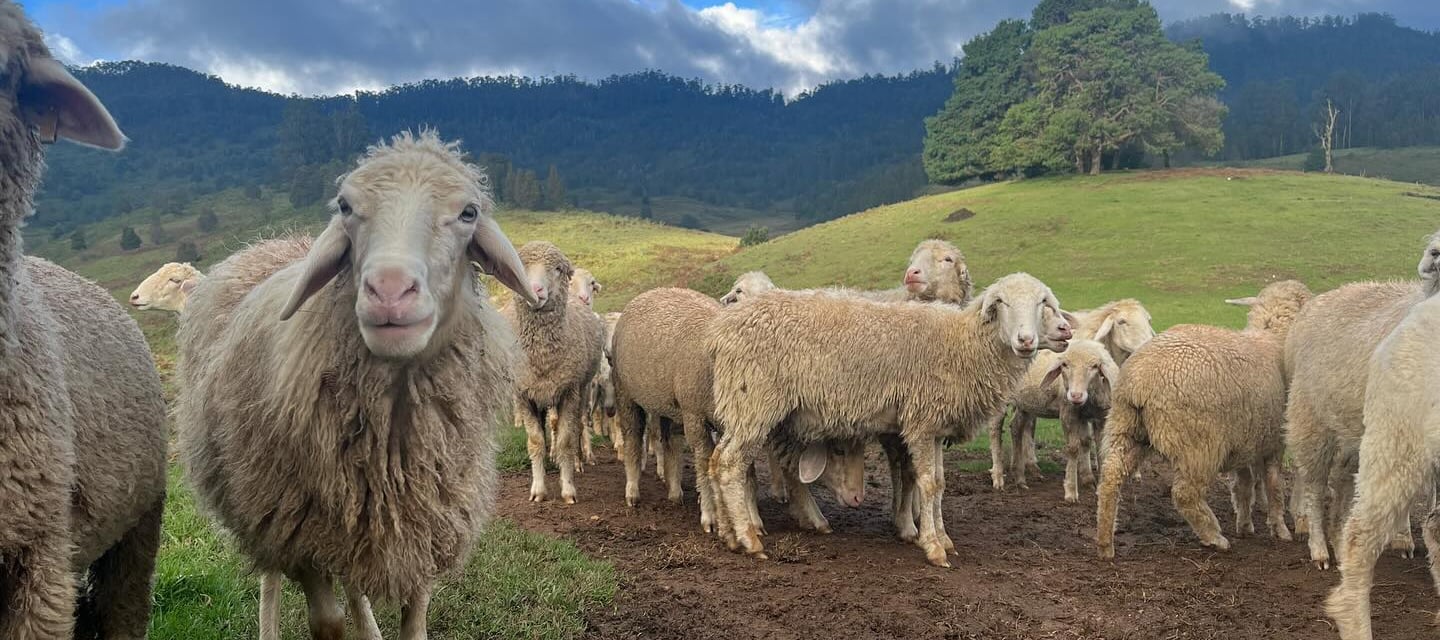
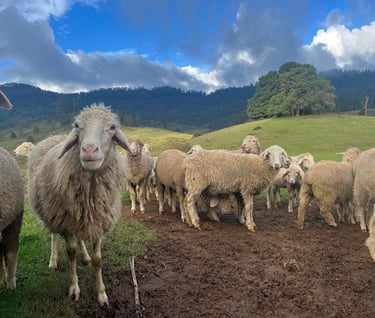
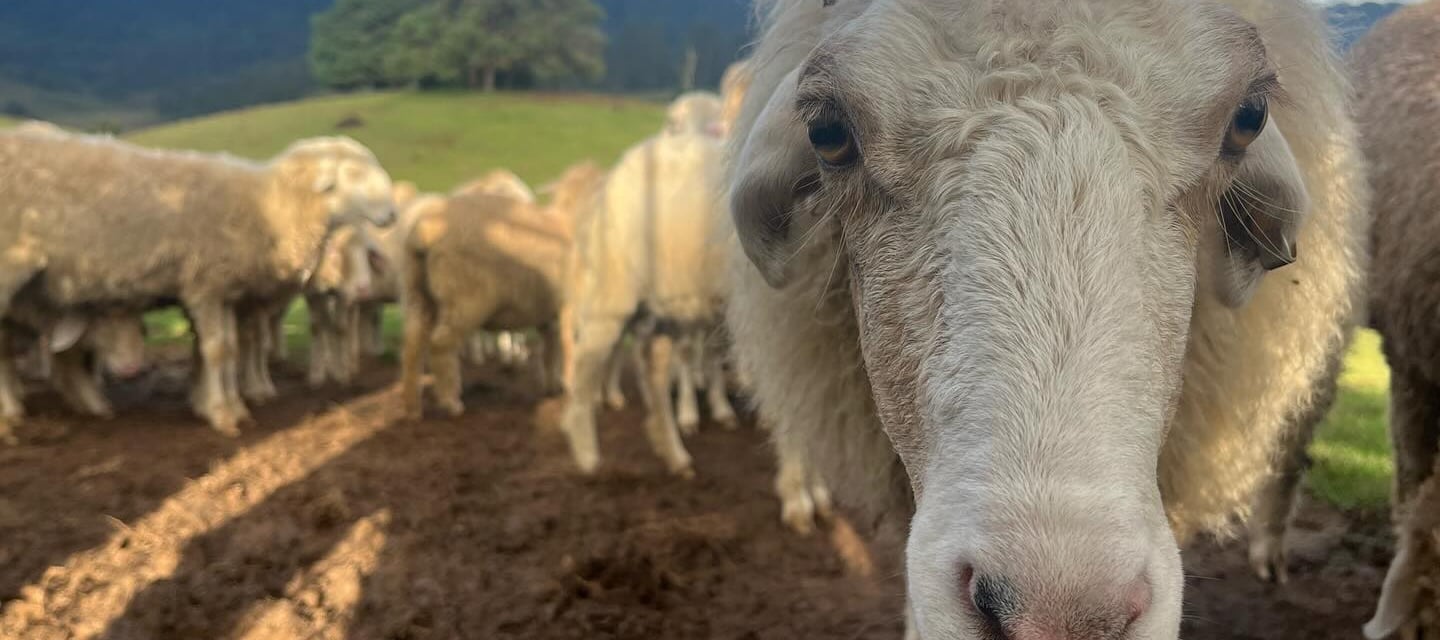
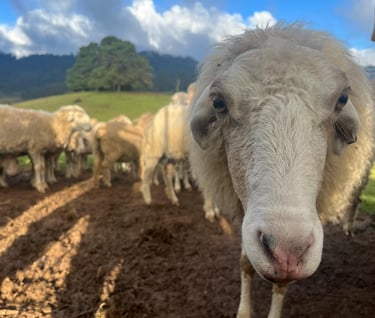
Not all farming in Mannavanur involves vegetables. The highland grasslands that surround the village have supported sheep grazing for generations, and today this pastoral tradition is recognised and studied at a national level. The Central Sheep and Wool Research Institution maintains a dedicated research station in Mannavanur. Scientists and technical officers based here work on understanding highland sheep breeds, wool quality, breeding improvement and the sustainability of pastoral farming in high-altitude environments. The station's work makes a direct difference to the livelihoods of sheep farmers not just in Mannavanur but across the highland pastoral regions of South India.
Because of this facility, the Indian Council of Agricultural Research (ICAR) has officially designated Mannavanur as an Agri Eco-Tourism site — one of very few villages in Tamil Nadu to hold this status. What that means in practice is that visitors are encouraged to engage with the farm, learn about both vegetable cultivation and pastoral farming, and experience highland agriculture in a structured and thoughtful way. The meadows around the lake and research station are where flocks are most visible. Sheep graze freely across the open grassland, and watching a flock move through the morning mist with hills behind them is one of the genuinely memorable experiences this region offers. The eco-park also maintains a rabbit farm where several breeds can be observed at close range, a particular attraction for families and younger visitors.
Key points:
• ICAR Research Station — scientists study sheep breeds, wool quality and highland pastoral systems
• Open meadow grazing — flocks visible throughout the year
• Rabbit farm — multiple breeds, close-up viewing
• ICAR Agri Eco-Tourism designation — structured farm visits available
• Horse riding — available at the farm for visitors
Experiencing Farm Life as a Visitor
The appeal of Mannavanur for tourists is not a list of monuments or amusement parks. It is something rarer: the chance to walk through a working highland farm landscape, breathe genuinely cool mountain air, and understand where food comes from in a way that most city visitors have never had the opportunity to do.
Walk Among the Terrace Farms
The terraced hillsides of Mannavanur and Poombarai are open to walk through. You can follow the narrow paths between fields, watch farmers at work during harvest and growing seasons, and see crops at different stages from seedling to ready harvest. The views across the terraces, especially on misty mornings, are among the finest agricultural landscapes in South India.
What to do: Walk the terrace paths, speak with farmers, photograph the layered hillsides, observe seasonal cultivation up close.
Visit the Sheep and Rabbit Farm
The ICAR eco-tourism facility at the research station welcomes visitors. Two breeds of sheep and a variety of rabbit types can be seen at close range. The farm offers organic snacks, horse riding and clear views over Mannavanur Lake. It is a well-organised stop that gives genuine insight into highland animal husbandry.
What to do: See sheep and rabbit breeds, try horse riding, buy organic snacks, enjoy panoramic views of the lake and surrounding hills.
Spend Time at Mannavanur Lake
The natural freshwater lake at the centre of the village is the region's centrepiece. Surrounded by hills, meadows and the research station grasslands, it is a place of genuine quiet and natural beauty. Water levels are highest between September and January — the best time for water activities. A small bridge over the lake outflow is a popular photography spot.
What to do: Coracle rides, kayaking, boating, zip-lining, bird watching, lakeside picnics.
Trek the Highland Routes
More than twenty trekking routes pass through the Mannavanur area, ranging from gentle farm walks to more challenging forest trails. The Kavunji to Kukkal trail is rated moderately difficult and takes trekkers through sheep meadows, shola forest and past prehistoric caves. The Poorakal viewpoint route opens up long views across valleys and gorges. The trail to Kookal Lake is an easier 5-kilometre walk suitable for most visitors. Note that a Forest Department permit is required for any trekking in the designated reserve forest areas.
Contact: Government of Tamil Nadu Tourist Office, Annasalai, Kodaikanal, Phone: 04542-241675 (trekking maps available here)
Buy Fresh Produce Directly from Farmers
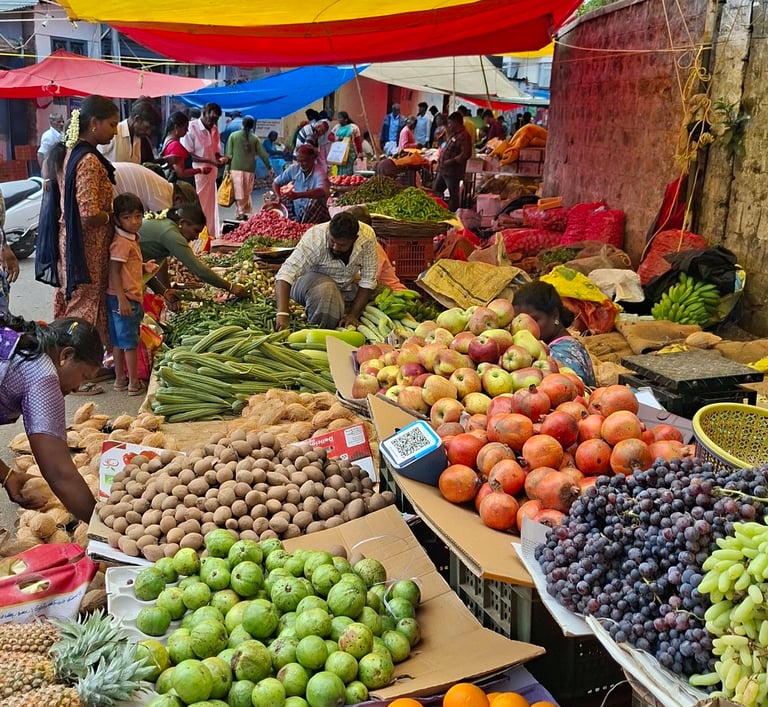
One of the simplest and most rewarding things to do in Mannavanur is to stop at a roadside stall and buy vegetables straight from the family that grew them. Carrots, beetroot, garlic, peas, sweet corn and seasonal strawberries are typically available. Prices are a fraction of what the same produce costs in Kodaikanal or Madurai, and the quality — picked within hours — is unbeatable. Your purchase directly supports the farming households of the village.
Drive the Mountain Roads via Poombarai and Polur
The roads connecting Kodaikanal to the highland farming villages are spectacular in their own right. The descent through eucalyptus and pine forest to Poombarai, with its roadside viewpoints over cascading terraced fields, is worth taking slowly. The drive on to Polur passes the waterfall and offers increasingly remote highland scenery. A loop route taking in Poondi reservoir and the Kookal Lake viewpoint makes for a full and deeply rewarding day out from Kodaikanal.
When to Visit for the Best Farm Experience
The highland farming calendar determines what you will see and when. Each season brings a different face to the landscape.
OCTOBER TO JANUARY — Peak Harvest and Best Farm Visits
This is the finest time to visit if you want to see the farms at maximum activity. The post-monsoon soil is rich and moist, crops are growing vigorously and the main harvest of the Rabi season — potatoes, broccoli, cauliflower and carrots — is either underway or freshly completed. The weather is clear and pleasantly cool. The lake is well-filled after the monsoon. This is the recommended season for most visitors.
JUNE TO SEPTEMBER — Monsoon Green
The monsoon transforms the highlands into a world of intense green. Terraces that look bare or brown in the dry months fill with fast-growing monsoon crops and the surrounding hills are draped with cloud and mist. The lake is at its fullest. Roads can be difficult after heavy rain, and some trekking routes become slippery. But for those who want to see the terraces at their most dramatically beautiful — deep green shelves dissolving into low cloud — the monsoon season is unforgettable.
FEBRUARY TO MAY — Quieter Months
The dry pre-monsoon period sees farming activity slow down as fields are prepared and some terraces rest between seasons. The landscape is drier and less visually striking than in other seasons. However, the weather is very pleasant for walking and driving, and the area is far less crowded.
Summary:
Best for farm visits and produce shopping: October, November, December, January
Best for green terrace scenery and the lake: June, July, August, September
Best for quiet travel and good weather:February, March, April
Planning Your Visit
The appeal of Mannavanur for tourists is not a list of monuments or amusement parks. It is something rarer: the chance to walk through a working highland farm landscape, breathe genuinely cool mountain air, and understand where food comes from in a way that most city visitors have never had the opportunity to do.
Dress for the Altitude
At 1,880 metres, the temperature in Mannavanur is consistently cooler than anywhere in the Tamil Nadu plains. Even on a warm afternoon, evenings and early mornings can feel genuinely cold. Carry a fleece or light jacket regardless of the season — you will need it for the lake and especially for early morning farm walks when the mist is still low.
Carry Your Own Food and Water
The village has very limited food stalls and no restaurants to speak of near the lake or the farms. The best approach is to carry a packed lunch and enough drinking water for a half-day or full-day visit. Roadside vendors do sell snacks, roasted corn and fresh vegetables, but do not rely on finding a meal when you arrive.
Trek Permits Are Required
Trekking within the Palani Hills Reserve Forest requires a permit from the Tamil Nadu Forest Department. This is not a formality — it is enforced. Permits and trekking maps can be obtained from the Tourist Office in Kodaikanal (Annasalai road, phone 04542-241675) before you set out. Plan ahead and collect yours the day before.
Leave Early from Kodaikanal
The road from Kodaikanal to Mannavanur is narrow, winding and passes through dense forest. The drive takes between 60 and 75 minutes for the 35-kilometre journey. Setting out early means arriving with the morning mist still on the fields — the best light for photographs and the most atmospheric time to be in
the village. It also avoids driving back after dark on mountain roads.
Buy from Farmers, Not Middlemen
The vegetables you see at roadside stalls in Mannavanur and Poombarai are sold directly by the farming families who grew them. Buying here — rather than at Kodaikanal's market — means the money goes straight to the household. It is also the best possible price for the freshest possible produce. Fill your bag.
Stay Overnight if You Can
The experience of waking up inside a highland farming village — hearing the first sounds of farm life, stepping out into the mist before sunrise — is quite different from a day trip. Nature's Trust operates a base camp with eight simple cottages on a 26-acre hillside site. The organisation runs guided treks, educational farm tours and hands-on activities including natural dyeing and clay work. It is the main accommodation option within the village. Homestays and guesthouses are also available in Poombarai for a more local experience.
Respect the Land and the People
Mannavanur and its neighbouring villages remain clean, quiet and largely free of the commercial clutter that has overtaken many tourist spots in the Kodaikanal area. This is because the people here care about their land. Visitors who carry back all waste, stay on paths through farmland and treat the landscape with the same respect the farming families do will be genuinely welcomed.
Where to stay
Good stays offer a harmonious balance of comfort, hospitality, and memorable experiences, ensuring travelers feel truly at home even while exploring new destinations.
Temperature
Summer 15°C to 25°C
Winter 10°C to 20°C
Location
77-0001-5557
x@josaf.in
Links
Contact
Mannavanur
10°12′45″N 77°20′38″E
Follow Us